Compare Google Ads vs Facebook Ads to find the best platform for your business. Learn when to use each, boost ROI, and scale campaigns in 2026.
In 2026, businesses can’t afford to guess which advertising platform will deliver the best results. Paid advertising remains a critical tool for growth, but deciding between Google Ads and Facebook Ads isn’t always straightforward. Both platforms have unique strengths, targeting methods, and cost structures. Choosing the right one can dramatically improve your ROI.
At Star Digital Marketing, we help businesses navigate this choice. Let’s break down the differences, ideal use cases, and strategic tips for using Google Ads and Facebook Ads effectively.
Understanding the Platforms: Intent vs. Interest
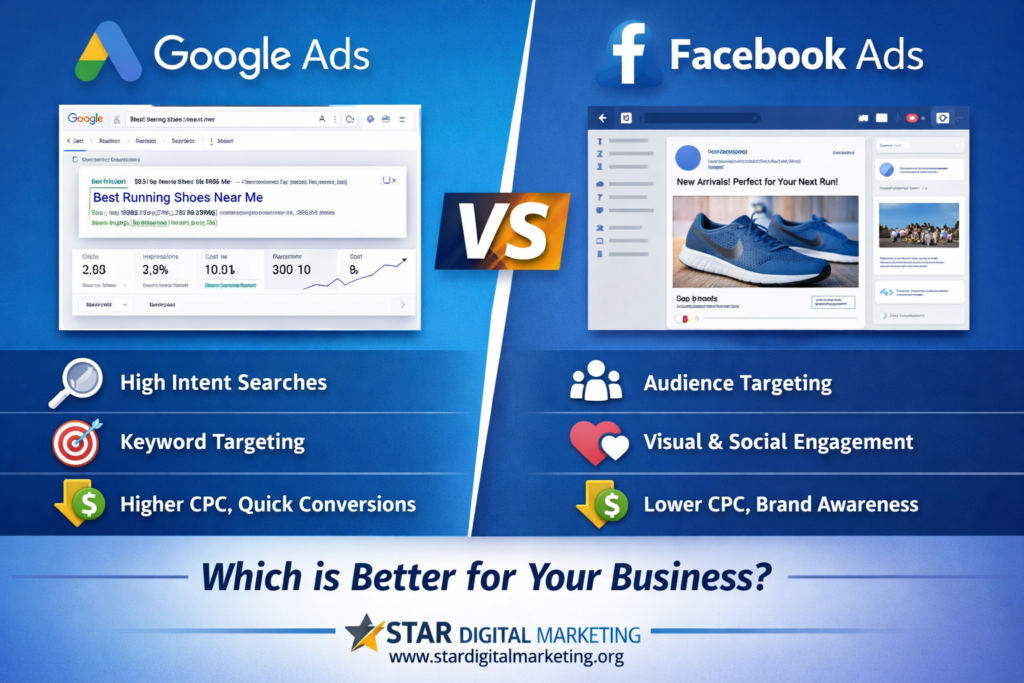
Google Ads is a search-driven platform. Ads appear when users actively search for products or services, meaning the audience already has purchase intent.
Facebook Ads (including Instagram) rely on interest-based targeting. Ads show in users’ feeds based on demographics, interests, and behavior—even if the user isn’t actively searching for your product.
Example:
- Someone googling “best running shoes near me” is showing buying intent. A Google Ad for your store will meet them at the right moment.
- Meanwhile, Facebook might display an ad for running shoes to someone following fitness pages or engaging with sports content.
Key Differences Between Google Ads and Facebook Ads
| Feature | Google Ads | Facebook Ads |
|---|---|---|
| Ad Type | Text, display, shopping, YouTube | Image, video, carousel, stories |
| Audience Targeting | Search keywords, location | Demographics, interests, behaviors |
| Cost-Per-Click (CPC) | Higher, competitive | Lower CPC, more flexible |
| Buyer Intent | High (search-driven) | Medium to low (awareness-driven) |
| Conversion Goals | Direct sales, leads | Awareness, engagement, retargeting |
| Ideal For | B2B, local services, high-intent eCommerce | B2C, lifestyle brands, retargeting campaigns |
When to Use Google Ads vs Facebook Ads
When to Use Google Ads
Google Ads works best when your audience is actively searching. Examples include:
- Local services: “emergency plumber near me.”
- Quick conversions for product sales
- Targeting high-intent buyers
- Time-sensitive promotions
- Dominating local search results
Pro Tip: For local businesses like salons, clinics, or law firms, Google Ads can deliver immediate visibility in the top three search results and Google Maps.
→ Related Service: PPC Campaign Management
When to Use Facebook Ads
Facebook Ads excels when you want to build awareness, engagement, or community. Ideal use cases include:
- Brand storytelling and community building
- Selling visually appealing or impulse-buy products
- Targeting specific demographics or interest groups
- Retargeting website visitors
- Promoting events, product launches, or video content
Real Example: One international eCommerce client increased ROI by 4X through Facebook retargeting campaigns combined with influencer-style creative content.
→ Explore: Social Media Marketing Services
Which Platform Is More Cost-Effective?
- Google Ads has a higher CPC, especially in competitive industries, but can deliver fast, high-intent conversions.
- Facebook Ads generally offer lower CPC, but may require longer nurturing for conversions.
Key Insight: ROI depends on your business goals:
- Direct sales → Google Ads often justifies the higher CPC.
- Engagement, awareness, or lead generation → Facebook Ads delivers better scale.
Performance Tracking: What to Measure
Regardless of platform, measuring results is critical. Star Digital Marketing tracks:
- Click-Through Rate (CTR)
- Conversion Rate
- Return on Ad Spend (ROAS)
- Cost per Lead (CPL)
- Engagement metrics (Facebook-specific)
Data-driven tracking ensures campaigns are optimized for maximum ROI.
Local & Global Reach Potential
Both platforms allow hyper-local targeting and international campaigns with multi-language support.
- A bakery in Mumbai can reach local ZIP codes
- A SaaS brand in New York can target specific international markets
This makes either platform suitable for businesses of all sizes and scopes.
Combining Google & Facebook Ads for Maximum Impact
Often, the best strategy isn’t choosing one platform — it’s using both together:
- Google Ads captures demand from high-intent searches
- Facebook Ads create demand and build awareness
Cross-platform synergy ensures your brand is seen when users search, scroll, and are ready to buy.
Best Platforms for Small Business Ads ROI 2026
For small businesses looking to maximize ROI in 2026:
- Use Google Ads for local search dominance and immediate sales
- Use Facebook Ads for targeted campaigns, retargeting, and storytelling
- Measure results, adjust budgets, and test creatives regularly
- Consider combining both platforms for a full-funnel strategy
Conclusion: Which Is Better, Google Ads or Facebook Ads?
There’s no one-size-fits-all answer. The “better” platform depends on:
- Business type
- Sales funnel stage
- Customer journey
- Marketing goals
When managed strategically, both platforms deliver results. Working with a team that understands the strengths of each ensures campaigns are optimized for ROI and growth.
Ready to Maximize Your Ad Spend?
Whether you’re aiming for search dominance or scroll-stopping visual campaigns, Star Digital Marketing can tailor the perfect strategy for your business.
👉 Schedule a free consultation today and let’s build your ROI-focused advertising plan.